Tarsus Pharmaceuticals (NASDAQ: TARS) - Building a First-in-Class Ophthalmic Franchise
Change from report: +44.7%1M: +43.6%3M: +68.6%
Published on 2025-07-31 by TradeFomo
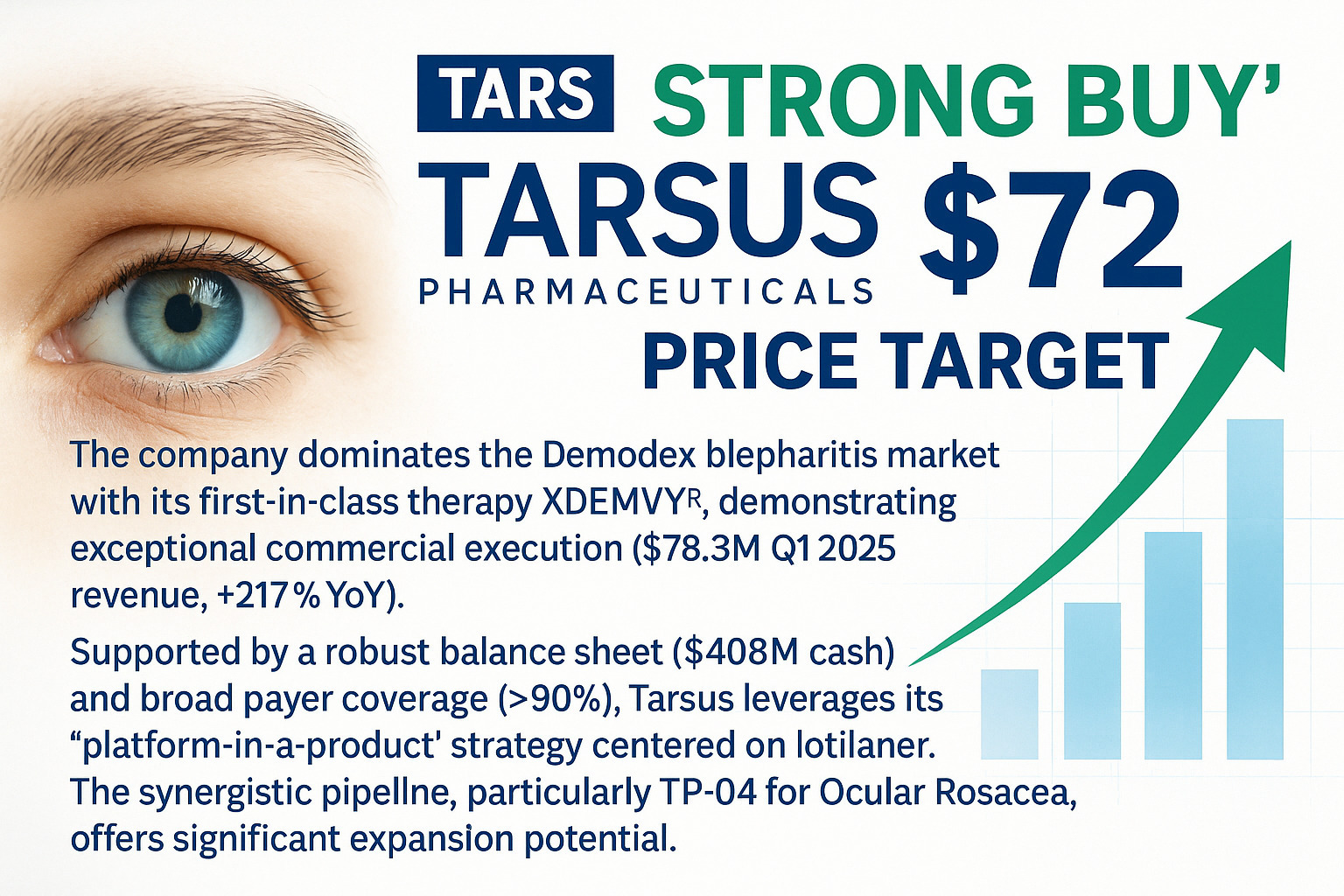
Executive Summary
This report provides an exhaustive investment analysis of Tarsus Pharmaceuticals, Inc. (NASDAQ: TARS), a commercial-stage biopharmaceutical company focused on ophthalmic therapeutics. The core investment thesis is that Tarsus represents a compelling and differentiated opportunity, anchored by its monopolistic position in the newly defined Demodex blepharitis market with its first-in-class therapy, XDEMVY®. The company has demonstrated exceptional commercial execution since XDEMVY's launch, achieving a revenue trajectory that ranks among the most successful in recent eye care history. This performance is underpinned by a proactive strategy of market creation, robust clinical data, and rapid attainment of broad payer coverage. The company's financial position is strong, fortified by recent capital raises that provide a substantial runway to fund ongoing commercialization and pipeline advancement. The clinical pipeline, centered on the same active pharmaceutical ingredient as XDEMVY, is strategically synergistic, with the lead candidate, TP-04 for Ocular Rosacea, poised to leverage the existing commercial infrastructure, creating a powerful path to significant operating leverage and franchise expansion. While the investment case is robust, it is balanced by the inherent risks of a single-product revenue stream, a high but necessary operational spend to build its market, and the emergence of potential indirect competition from adjacent therapeutic areas.
Key Findings
- Strengths: Tarsus enjoys a formidable first-mover advantage with XDEMVY®, the only FDA-approved treatment for Demodex blepharitis, a large and previously untapped market [1]. The company's commercial launch has been exceptionally strong, characterized by a rapid revenue ramp, deep prescriber adoption, and extensive payer coverage [3]. This is supported by a strong balance sheet with over $400 million in cash, an experienced leadership team with deep biopharma and venture capital roots, and a high-potential pipeline that leverages the core asset, lotilaner, into new, high-value indications [3].
- Weaknesses: The company is currently unprofitable, driven by a significant investment in Selling, General & Administrative (SG&A) expenses required to build the XDEMVY® franchise from the ground up [4]. This high cash burn rate, coupled with a heavy reliance on the continued success of a single commercial product, constitutes the primary financial vulnerability [8].
- Opportunities: The most significant opportunities lie in the continued market expansion for XDEMVY®, both in the U.S. and internationally through partnerships [9]. A potential label expansion into the much larger Meibomian Gland Dysfunction (MGD) market represents a major value inflection point [3]. The successful clinical development and commercialization of pipeline assets, particularly TP-04 for Ocular Rosacea, could transform Tarsus into a multi-product ophthalmic leader [3].
- Threats: The primary competitive threat is indirect, stemming from therapies in development for MGD that may have ancillary effects on Demodex mites, potentially eroding XDEMVY's market exclusivity over the long term [11]. The company also faces risks common to the sector, including potential for clinical trial setbacks in its pipeline programs and long-term pressure on drug pricing and reimbursement, which could compress gross-to-net margins [8].
Final Recommendation
A comprehensive evaluation of Tarsus Pharmaceuticals' strategic position, commercial execution, financial strength, and future growth prospects supports a positive investment outlook. The company has successfully navigated the most challenging phase of its lifecycle—transforming from a clinical-stage entity to a high-growth commercial enterprise—with remarkable proficiency. The current market valuation does not appear to fully discount the long-term franchise potential of XDEMVY® and the highly synergistic pipeline. Therefore, this analysis initiates coverage of Tarsus Pharmaceuticals with a Buy rating and a 12-month price target of $72.00. This target is predicated on continued strong commercial execution for XDEMVY®, positive progress in the TP-04 Phase 2 trial, and the company's clear trajectory toward profitability.
Section I: Corporate Profile - A New Vision for Ophthalmic Therapeutics
Business Model: The "Platform-in-a-Product" Strategy
Tarsus Pharmaceuticals has established a highly efficient and strategically focused business model centered on maximizing the therapeutic potential of a single, well-characterized active pharmaceutical ingredient (API), lotilaner [6]. This "platform-in-a-product" approach is a cornerstone of the company's investment thesis. By identifying an API with a proven mechanism of action in a different field—in this case, an anti-parasitic agent from animal health—and repurposing it for human ophthalmic conditions, Tarsus has significantly de-risked the foundational biology of its entire portfolio [13]. The company's stated mission is to apply "proven science and new technology to revolutionize treatment for patients, starting with eye care," a philosophy embodied by the development of lotilaner for human use [15].
The core scientific approach is to target the root cause of disease rather than merely managing symptoms [6]. The API, lotilaner, is designed to paralyze and eradicate parasites by inhibiting their specific gamma-aminobutyric acid-gated chloride (GABA−Cl) channels, a mechanism that is not active in humans, thereby providing a targeted effect with a favorable safety profile [13]. This mechanism is directly applicable to a range of diseases where parasites are a causative or contributing factor, starting with the Demodex mite infestation in Demodex blepharitis and extending to related conditions like Ocular Rosacea [6]. Each successful clinical trial and the ongoing commercial success of XDEMVY® further validate the safety and efficacy of lotilaner, creating a virtuous cycle of risk reduction for subsequent pipeline programs that utilize the same API.
Leadership and Governance: A Network of Biopharma Veterans
The strength and experience of a company's leadership team and board of directors are critical non-financial indicators of its potential for success. In this regard, Tarsus is exceptionally well-positioned. The company's leadership is composed of a network of seasoned professionals with deep and interconnected roots in the biopharmaceutical industry, particularly within the venture capital and investment communities that are instrumental in funding and guiding emerging life sciences companies [5].
Bobak Azamian, MD, PhD, the company's co-founder, Chairman, and Chief Executive Officer, brings a crucial blend of scientific acumen and strategic financial expertise from his time as an investor at top-tier venture firms Versant Ventures and Third Rock Ventures [5]. This background is not merely biographical; it informs the company's capital-efficient strategy and its demonstrated ability to successfully access public markets for financing [19].
This network of expertise extends to the Board of Directors, which includes individuals with significant strategic, operational, and financial oversight capabilities. Board members include an Operating Partner from Frazier Healthcare Partners, a Portfolio Manager from Marshall Wace, a Founder and Managing Director of Versant Ventures, and the former US Life Sciences Leader at Ernst & Young [5]. This composition is a significant de-risking factor for investors. The presence of these individuals implies that Tarsus underwent rigorous due diligence in its formative stages and continues to benefit from a high level of strategic guidance. This network is an intangible asset that likely facilitated the company's successful financings, including the recent upsized public equity offerings, and will be invaluable for future strategic initiatives, such as the anticipated partnership for the TP-05 program or navigating complex capital markets [3]. It provides a level of credibility and strategic access that is not typically found in a company of its size and stage.
Section II: The Commercial Engine - Analyzing the XDEMVY® Launch Trajectory
The Unmet Need in Demodex Blepharitis: Creating a Market from Scratch
Prior to the arrival of Tarsus Pharmaceuticals, Demodex blepharitis was a medical condition hiding in plain sight. It is a highly prevalent disease, affecting an estimated 25 million eye care patients in the United States, which translates to approximately one out of every twelve adults who visit an eye care professional [1]. Despite its prevalence, the condition was chronically underdiagnosed and, most critically, had no FDA-approved treatments specifically designed to address its root cause [1].
The standard of care was a patchwork of ineffective and often frustrating options for both patients and clinicians. Management typically involved off-label prescription medications, various in-office lid-cleansing procedures, and a host of over-the-counter (OTC) products, such as lid wipes and preparations containing tea tree oil (TTO) [22]. These approaches provided, at best, temporary symptomatic relief and failed to address the underlying infestation of Demodex mites [21]. The patient burden associated with the disease is substantial, characterized by chronic itching, redness, inflammation, and the presence of collarettes—a pathognomonic sign of the disease consisting of waxy debris and mite waste at the base of the eyelashes [1]. This burden extends beyond physical discomfort, negatively impacting daily activities such as nighttime driving and contributing to significant psychosocial distress [24].
A key element of Tarsus's pre-launch strategy was to rigorously define and publicize this unmet need. Through company-sponsored real-world studies, such as the Titan prevalence study and the Atlas patient burden study, Tarsus systematically quantified the scale of the problem [21]. This was a deliberate and astute act of market creation. By providing clinicians and payers with robust data on the prevalence and impact of Demodex blepharitis, Tarsus built the clinical and economic justification for a novel, targeted therapy, effectively priming the market for the launch of XDEMVY®.
Clinical Profile and First-Mover Advantage
XDEMVY® (lotilaner ophthalmic solution) 0.25% represents a paradigm shift in the treatment of Demodex blepharitis. It is the first and only therapeutic approved by the U.S. Food and Drug Administration (FDA) that directly targets and eradicates the Demodex mites responsible for the disease [1]. This provides Tarsus with a powerful and defensible first-mover advantage in a market it largely defined.
The FDA approval, granted in July 2023, was based on the strength of two large, well-controlled pivotal trials, Saturn-1 and Saturn-2, which collectively enrolled over 800 patients [1]. The clinical results from these studies were compelling and unambiguous. Both trials met all primary and secondary endpoints with high statistical significance (p<0.0001), demonstrating clinically meaningful improvements in the signs of the disease [1]. Key endpoints included a "collarette cure" (reduction of the disease's hallmark sign to no more than two collarettes per upper lid) and "mite eradication" (a mite density of 0 mites per lash), directly proving the drug's efficacy against the root cause of the condition [1]. Importantly, some patients began to see improvement as early as two weeks into the six-week treatment course [1].
The safety and tolerability profile of XDEMVY® is equally strong, a crucial factor for a topical therapy used in a sensitive area like the eye. Across the pivotal trials, the drug was generally safe and well-tolerated. The most common treatment-related adverse event was instillation site stinging and burning, which was reported in 10% of patients and was typically mild and transient [1]. No serious treatment-related adverse events were reported, and there were no discontinuations due to adverse events, underscoring the product's favorable profile for widespread clinical use [30].
Commercial Performance Deep Dive: A Best-in-Class Launch
The commercial launch of XDEMVY®, which commenced in August 2023, has been nothing short of exceptional and is on track to be one of the most successful therapeutic launches in the history of the anterior segment eye care market [3]. The performance across key commercial metrics demonstrates strong execution and validates the company's market-building strategy.
- Explosive Revenue Growth: The revenue ramp has been remarkably steep. Net product sales for the full year 2024, the first full year on the market, reached $180.1 million [4]. The momentum has continued to accelerate into 2025, with Q1 2025 net product sales hitting $78.3 million. This figure represents a staggering 217% increase year-over-year and a robust 18% sequential increase over the strong fourth quarter of 2024 [3].
- Strong Underlying Demand: The revenue figures are supported by strong and growing prescription volumes. In Q1 2025 alone, approximately 72,000 bottles of XDEMVY® were dispensed to patients, a 23% increase over the previous quarter [3]. This indicates that growth is being driven by genuine patient and physician demand, not just channel stocking or price increases.
- Rapid Market Access: A critical component of any successful drug launch is securing broad payer coverage to ensure patient access. Tarsus has executed flawlessly on this front. As of early 2025, the company has secured broad commercial, Medicare, and Medicaid reimbursement for XDEMVY® that extends to more than 90% of covered lives in the U.S. [3]. Achieving such comprehensive coverage so quickly after launch is a significant accomplishment that removes a major barrier to adoption.
- Deepening Prescriber Adoption: The company's sales force has been effective at driving adoption that is both broad and deep. More than 15,000 Eye Care Professionals (ECPs) have prescribed XDEMVY® since its launch [4]. More importantly, the prescribing behavior is maturing from trial to routine use. At the end of Q1 2025, the number of ECPs writing more than one prescription per week had increased by nearly 110% compared to Q3 2024, a key indicator of sustainable, long-term growth [3].
- Effective Marketing and Patient Activation: Tarsus has complemented its professional education efforts with a memorable and effective Direct-to-Consumer (DTC) advertising campaign [14]. This strategy is designed to activate patients to ask their doctors about the condition and the treatment, a powerful driver of prescription volume. The campaign's success is evidenced by a 140% increase in average weekly visits to the product's website in March 2025 compared to December 2024 [3].
The impressive commercial execution is a direct consequence of the company's strategic decision to define and build the Demodex blepharitis market itself. The substantial investment in prevalence studies, physician education, and patient-facing advertisement was not merely a launch expense but a strategic investment in creating a durable franchise. This proactive approach establishes Tarsus as the definitive clinical and commercial leader, erecting a high barrier to entry for any potential future competitors, who would need to overcome not only a clinical hurdle but also the formidable educational and brand-name moat that Tarsus has constructed.
However, the rapid attainment of over 90% payer coverage has come at a cost that investors must monitor closely. The company's Q1 2025 financial results revealed a gross-to-net (GTN) discount of approximately 47% [3]. This means that for every dollar of XDEMVY's list price, Tarsus recognizes only about 53 cents in net revenue after accounting for rebates, chargebacks, and other payer fees. While this is a necessary trade-off to ensure broad patient access and drive volume, it is a critical variable for the company's path to profitability. The "bear case" cited by some analysts specifically highlights concerns about high GTN guidance [12]. Therefore, while the launch is an unmitigated success on a volume basis, the profitability per unit is substantially lower than the list price would suggest. Investors must incorporate this high GTN into their financial models and monitor it quarterly for any signs of increasing pressure from payers, as it directly impacts the timeline to achieving profitability.
Intellectual Property Moat
Tarsus has secured a durable competitive advantage for XDEMVY® through a multi-layered intellectual property strategy. The product is protected by a robust portfolio of U.S. patents covering its formulation and methods of use for treating blepharitis [34]. The majority of these patents are expected to provide protection through December 14, 2038, ensuring a long runway of market exclusivity [34].
In addition to patent protection, XDEMVY® benefits from a crucial layer of regulatory protection. As a New Chemical Entity (NCE), the FDA has granted it five years of data exclusivity, which provides a strong barrier to generic competition until July 24, 2028, irrespective of the patent status [34]. This combination of extensive patent life and regulatory exclusivity creates a formidable moat around Tarsus's lead commercial asset. The underlying intellectual property for lotilaner is licensed from Elanco, reflecting the company's capital-efficient strategy of leveraging existing, well-characterized assets for new therapeutic applications [8].
Section III: Financial Health and Operational Analysis
Income Statement Review: Charting the Path to Profitability
An analysis of Tarsus's income statement reveals a company in a dynamic and critical transition from a pre-commercial, R&D-focused entity to a high-growth commercial enterprise. The financial data clearly illustrates the significant investment required to launch a first-in-class product and build a new market, alongside the powerful revenue growth that this investment is generating.
- Revenue: Prior to the third quarter of 2023, the company generated minimal revenue. Since the launch of XDEMVY®, revenue growth has been exponential. Full-year 2024 revenue reached $182.95 million, a more than nine-fold increase from the $17.45 million reported in 2023 [38]. This trajectory has continued into 2025, with Q1 sales of $78.3 million, putting the company on a run-rate well in excess of $300 million [3].
- Cost of Sales and Gross Margin: Consistent with specialty pharmaceutical products, XDEMVY® carries a very high gross margin. For the full year 2024, the cost of sales was just $12.8 million against $183.0 million in revenue, resulting in a gross profit of $170.1 million [38]. This translates to a gross margin of approximately 93%, providing a strong foundation for future profitability as the company scales. The cost of sales includes manufacturing costs, royalties paid to the licensor Elanco, and the amortization of regulatory approval milestone payments [4].
- Operating Expenses: The primary story within the company's operating expenses is the deliberate and massive investment in SG&A to support the commercial launch.
- Selling, General & Administrative (SG&A): SG&A expenses are the largest component of the company's cost structure. They surged from $44.9 million in 2022 to $108.7 million in 2023, and then more than doubled to $237.3 million in 2024 [38]. This dramatic increase reflects the costs associated with building out a commercial infrastructure, deploying an expanded sales force, and funding the significant DTC advertising campaign [4].
- Research & Development (R&D): In contrast, R&D expenses have grown more modestly, from $42.6 million in 2022 to $53.4 million in 2024 [38]. This reflects the company's strategic shift in focus from late-stage clinical development for its initial indication to commercialization, while still advancing its earlier-stage pipeline programs.
- Profitability: Tarsus is not yet profitable, a direct result of its heavy investment in the XDEMVY® launch. The company reported a net loss of $115.6 million for the full year 2024 [4]. However, this represents an improvement from the $135.9 million net loss reported in 2023, despite the massive increase in SG&A spending [40]. This narrowing loss is a critical indicator of improving operating leverage; the high-margin revenue from XDEMVY® is beginning to cover a larger portion of the fixed and variable costs, putting the company on a clear trajectory toward profitability. The net loss continued to narrow in Q1 2025, coming in at $25.1 million [3].
The table below provides a consolidated view of Tarsus's financial performance over the past three fiscal years, highlighting its transition into a commercial-stage company.
| Metric | FY 2024 | FY 2023 | FY 2022 |
|---|---|---|---|
| Total Revenue | $182,953 | $17,447 | $25,816 |
| Cost of Revenue | $12,826 | $1,593 | $955 |
| Gross Profit | $170,127 | $15,854 | $24,861 |
| R&D Expenses | $53,386 | $50,312 | $42,624 |
| SG&A Expenses | $237,310 | $108,700 | $44,949 |
| Operating Income (Loss) | ($120,569) | ($143,158) | ($62,712) |
| Net Income (Loss) | ($115,554) | ($135,893) | ($62,091) |
Data in thousands of USD. Sources: [38]
Balance Sheet and Cash Flow: A Fortified Financial Position
Tarsus maintains a strong and liquid balance sheet, which is a crucial asset for a company executing a high-investment commercial launch.
- Cash Position: As of March 31, 2025, Tarsus reported a robust cash, cash equivalents, and marketable securities position of approximately $408 million [3]. This substantial cash balance provides the company with a multi-year operational runway at its current burn rate, mitigating near-term financing risk and allowing management to execute its strategy from a position of financial strength.
- Capital Raises: The company's strong cash position has been actively managed through opportunistic access to the capital markets. In early 2025, Tarsus completed an upsized public equity offering that raised approximately $135 million in gross proceeds [3]. The ability to raise significant capital on favorable terms following the successful launch of XDEMVY® demonstrates strong investor confidence in the company's strategy and execution.
- Debt: The company employs a conservative approach to leverage, with minimal debt on its balance sheet. As of Q1 2025, its debt-to-equity ratio was a very manageable 0.21 [41].
- Cash Flow: As expected for a company in its growth phase, operating cash flow remains negative, reflecting the period of peak investment. For the twelve months ending March 31, 2025, operating cash flow was approximately -$66 million [41]. However, the company's fortified balance sheet provides more than sufficient capital to fund these operations as it drives toward cash flow breakeven and, ultimately, profitability.
The company's financial strategy is clearly one of aggressive but calculated investment for market capture. The decision to more than double SG&A spending in 2024 was a deliberate choice to build an enduring franchise for XDEMVY®, a strategy that was prudently funded by raising capital from a position of strength. The most telling financial indicator is that despite this massive increase in spending, the company's net loss actually improved from 2023 to 2024. This demonstrates that the revenue growth being generated by the SG&A investment is highly accretive and that the company is successfully converting its investment into high-margin revenue. If this trend of improving operating leverage continues, it validates the high-spend strategy and points directly to the company achieving profitability in the 2025-2026 timeframe, consistent with analyst expectations [43].
Section IV: The Pipeline - Building a Multi-Billion Dollar Franchise
Beyond the immediate success of XDEMVY® in Demodex blepharitis, the long-term investment case for Tarsus is substantially bolstered by its strategically synergistic clinical pipeline. The company is leveraging its core asset, lotilaner, to pursue additional high-value indications, creating the potential for significant future growth and transforming Tarsus from a single-product story into a diversified ophthalmic franchise.
TP-04: Targeting the Ocular Rosacea Opportunity
The most significant near-term pipeline opportunity for Tarsus is TP-04, a topical gel formulation of lotilaner being developed for the treatment of Ocular Rosacea [6].
- A Large, Unmet Need: Ocular Rosacea is a common and chronic inflammatory condition of the eyes and eyelids, characterized by redness, irritation, and dryness [6]. It is estimated to affect between 15 and 18 million people in the United States and may be present in up to 60% of patients with dermatological rosacea [6]. Critically, there are currently no FDA-approved treatments specifically for this condition, representing a major unmet medical need [3].
- Market Potential: The total market for rosacea therapeutics is substantial, valued at over $2.2 billion in 2025 and projected to grow at a compound annual growth rate (CAGR) of approximately 7% [44]. The ocular rosacea segment is estimated to account for over 25% of this market, suggesting a potential addressable market opportunity for a first-in-class therapy like TP-04 of more than $550 million annually in the U.S. alone [46].
- De-Risked Mechanism and Development Path: The scientific rationale for using lotilaner in Ocular Rosacea is strong, as the pathogenesis of the disease is thought to involve an overgrowth of Demodex mites, providing a direct mechanistic link to lotilaner's anti-parasitic activity [6]. Furthermore, Tarsus has already generated positive clinical data for lotilaner in papulopustular rosacea, which significantly de-risks the mechanism of action for this related ocular indication [14]. The company is on a clear development path, with plans to initiate a Phase 2 clinical trial for TP-04 in the second half of 2025 [3].
The strategic importance of TP-04 to the Tarsus investment thesis cannot be overstated. The development of this asset showcases an exceptionally synergistic pipeline strategy. Ocular Rosacea is diagnosed and managed by the same ophthalmologists and optometrists who are currently prescribing XDEMVY®. This means that upon potential approval, Tarsus can launch TP-04 by leveraging its entire existing commercial infrastructure—the same sales force, the same physician relationships, and the same brand recognition within the eye care community. The incremental cost of launching this second major product would be a fraction of the initial investment required to build the XDEMVY® franchise. This creates a powerful operating leverage dynamic, where a much larger percentage of TP-04 revenue would contribute directly to the bottom line, dramatically accelerating the company's overall timeline to profitability and solidifying its position as a leader in treating diseases of the eyelid margin.
TP-05: A Novel Prophylactic Approach to Lyme Disease
Tarsus is also exploring the systemic potential of lotilaner with TP-05, an oral tablet being developed for the prevention of Lyme disease [6].
- Innovative Approach: TP-05 represents a novel, non-vaccine approach to disease prevention. The oral tablet is designed to rapidly achieve systemic blood levels of lotilaner sufficient to kill infected ticks that attach to the human body, thereby preventing the transmission of the Borrelia bacteria that causes Lyme disease [6].
- Positive Proof-of-Concept Data: The program has already achieved a key milestone. In February 2024, Tarsus announced positive topline results from the Carpo trial, a Phase 2a proof-of-concept "tick-kill" study [48]. The trial demonstrated that TP-05 achieved a statistically significant and high rate of tick mortality compared to placebo, both shortly after dosing and at 30 days post-dose, suggesting the potential for both rapid and durable protection [48].
- Market Opportunity and Strategy: While the current market for Lyme disease prevention is niche, it is growing rapidly, with a projected CAGR of nearly 20% [49]. A convenient, on-demand oral prophylactic could significantly expand this market. Recognizing the substantial investment required for late-stage development in infectious disease, Tarsus management has clearly articulated a strategy to partner the TP-05 program. This prudent approach will allow the company to realize value from the asset while conserving its own capital to focus on its core eye care franchise [14]. The company plans to initiate a Phase 2 study in 2026 to further advance the program toward a potential partnership [3].
Lifecycle Extension: MGD and International Expansion
In addition to its distinct pipeline programs, Tarsus is pursuing a robust lifecycle management strategy for XDEMVY® to maximize its long-term value.
- Meibomian Gland Dysfunction (MGD): Recognizing the significant clinical overlap between Demodex infestation and MGD, Tarsus is proactively generating data to support the use of XDEMVY® in this patient population. Data from the Ersa and Rhea studies have already demonstrated that XDEMVY® provides statistically significant and clinically meaningful improvements in the signs and symptoms of MGD in patients with Demodex mites [3]. A potential future label expansion into MGD would unlock a massive market opportunity, which is valued at over $2.2 billion in 2024 and is projected to grow to nearly $5 billion by 2035 [50].
- International Expansion: Tarsus is actively pursuing a global expansion strategy for XDEMVY®. The company has a strategic partnership with Grand Pharmaceutical Group for development and commercialization in Greater China, where a New Drug Application has been accepted and a decision is anticipated in 2027 [6]. The company is also on track for a potential European regulatory approval in 2027 with a preservative-free formulation of the drug and anticipates meeting with Japanese regulatory authorities in the second half of 2025 to define a path forward in that market [3].
The table below summarizes the key assets in Tarsus's value-driving pipeline.
| Candidate | Active Ingredient | Indication | Development Phase | Key Milestone / Status | Est. U.S. Market Size |
|---|---|---|---|---|---|
| XDEMVY® (TP-03) | Lotilaner 0.25% | Demodex Blepharitis | Marketed (U.S.) | Strong commercial launch ongoing | ~25M Patients |
| TP-03 | Lotilaner 0.25% | Meibomian Gland Disease | Phase 2 | Positive data from Ersa/Rhea trials | ~$2.2B (2024) |
| TP-04 | Lotilaner Gel | Ocular Rosacea | Phase 2 | Trial initiation planned H2 2025 | >$550M (25% of Rosacea Market) |
| TP-05 | Oral Lotilaner | Lyme Disease Prevention | Phase 2 | Phase 2 study planned for 2026 | ~$42M (2024), fast-growing |
Sources: [3]
Section V: Market Positioning and Competitive Intelligence
Demodex Blepharitis: A Market of One
In the specific market for the treatment of Demodex blepharitis, Tarsus Pharmaceuticals currently operates in an enviable position: it is a market of one. XDEMVY® is the first and only FDA-approved therapy for the condition, granting the company a monopoly that is protected by a strong intellectual property portfolio, including numerous patents and New Chemical Entity (NCE) exclusivity [1]. The incumbent "competition" consists of the very OTC remedies, such as tea tree oil wipes and in-office procedures, that Tarsus is systematically displacing through its comprehensive market education and physician engagement efforts [21]. By defining the disease and providing its only targeted solution, Tarsus has established itself as the undisputed leader.
Emerging Threats: The MGD-Blepharitis Overlap
The most significant and tangible long-term competitive threat to Tarsus does not come from a direct challenger in Demodex blepharitis, but rather indirectly from the adjacent and much larger market for Meibomian Gland Dysfunction (MGD). MGD is a leading cause of dry eye disease and shares overlapping symptoms and patient populations with blepharitis, with Demodex mites often implicated as a contributing factor [27]. Several companies are developing therapies for MGD, and the success of these programs could create indirect competition for XDEMVY®.
The key competitor to monitor in this space is Azura Ophthalmics, a private, clinical-stage company. Azura's lead candidate is AZR-MD-001, an ophthalmic ointment containing selenium sulfide, which is currently in Phase 3 clinical trials for the treatment of MGD [11].
- Mechanism of Action: The primary mechanism of AZR-MD-001 is that of a keratolytic agent. It is designed to treat the root cause of MGD by breaking down the abnormal keratin protein blockages within the meibomian glands, thereby restoring the normal flow and quality of meibum [11].
- The Competitive Angle: While its primary mechanism is distinct from that of lotilaner, Azura has stated that AZR-MD-001 is also believed to "kill mites and bacteria on eyelash follicles" [11]. This claim, if substantiated and included in a potential product label, would represent a direct challenge to XDEMVY's unique positioning. If AZR-MD-001 is approved for MGD, physicians treating patients with lid margin disease and overlapping symptoms might be inclined to prescribe it as an all-in-one therapy, potentially eroding XDEMVY's market share among patients with a suspected Demodex component.
Another company listed as a competitor in one source is ONL Therapeutics [61]. However, a review of their clinical pipeline reveals a focus on back-of-the-eye retinal diseases, such as geographic atrophy, glaucoma, and retinal detachment [62]. As such, ONL Therapeutics does not appear to represent a direct or indirect competitor to Tarsus's anterior segment-focused franchise at this time.
The true competitive battleground for Tarsus over the next three to five years will therefore not be in the market it currently dominates, Demodex blepharitis, but in the larger and more complex MGD space. Tarsus's management has demonstrated strategic foresight in this regard. The company's decision to proactively conduct the Ersa and Rhea trials to generate its own positive MGD data for XDEMVY® is a strategically astute move [3]. This initiative serves a dual purpose. Defensively, it builds a clinical moat against the potential market entry of Azura's AZR-MD-001 by demonstrating that XDEMVY® also provides benefits to MGD patients with Demodex infestation. Offensively, it creates a significant opportunity for a future label expansion, allowing Tarsus to turn a potential competitive threat into a major market expansion opportunity. The outcome of this emerging "data war" in the MGD space will be a critical determinant of Tarsus's long-term growth potential and valuation.
Section VI: Valuation and Market Perspective
Valuing a high-growth, commercial-stage biopharmaceutical company like Tarsus requires a multi-faceted approach that considers its current performance, future growth prospects, and its position relative to industry peers.
Relative Valuation Analysis: Price-to-Sales (P/S) Ratio
Given that Tarsus is not yet profitable as it invests heavily in its commercial launch, traditional earnings-based metrics like the Price-to-Earnings (P/E) ratio are not meaningful [42]. The most appropriate and widely used metric for valuing a company in this stage of its lifecycle is the Price-to-Sales (P/S) ratio, which compares the company's market capitalization to its trailing twelve-month (TTM) revenue [68].
As of late July 2025, Tarsus has a market capitalization of approximately $1.71 billion and TTM revenue of $233.7 million [41]. This yields a TTM P/S ratio of approximately 7.3x.
To put this valuation in context, it is necessary to compare it to relevant industry benchmarks. The Tarsus P/S ratio of 7.3x is higher than the median for the broader, more mature U.S. Pharmaceuticals industry, where P/S ratios under 4.8x are common [69]. However, this is an imperfect comparison, as Tarsus is a high-growth entity. When benchmarked against the more dynamic and growth-oriented Biotechnology sector, its valuation appears more reasonable. The average P/S ratio for the biotechnology industry is approximately 6.6x, placing Tarsus roughly in line with its sector peers [70]. One source, using a specific peer group, even suggests that Tarsus represents good value compared to a peer average P/S of 17.3x [68]. This analysis indicates that while the market is assigning a premium to Tarsus for its rapid growth and monopoly status, the valuation is not excessive when viewed within the context of its high-growth peer group.
Analyst Consensus and Price Targets
The sentiment among Wall Street analysts covering Tarsus is overwhelmingly positive, providing strong third-party validation of the company's investment thesis.
- Consensus Rating: The consensus rating for TARS stock is a "Strong Buy" [12]. An analysis of 10 to 14 recent analyst ratings shows a vast majority recommending the stock as a "Buy" or "Strong Buy," with only a single "Hold" rating and zero "Sell" ratings recorded [12].
- Price Targets: The average 12-month analyst price target for Tarsus is approximately $72.00 [18]. This represents a potential upside of nearly 80% from the stock's late-July 2025 price of approximately $40-$41 [71]. The price targets from individual analysts show a wide range, spanning from a low of around $51 to a high of $94, but are universally positioned well above the current stock price [71].
Forward-Looking Valuation: Peak Sales Potential
The significant upside implied by analyst price targets is rooted in the substantial long-term revenue potential of XDEMVY® and the company's pipeline. Analyst peak sales forecasts for XDEMVY® in the Demodex blepharitis indication alone are robust, with some projecting the product could achieve annual sales of approximately $1 billion in the U.S. [77]. H.C. Wainwright, for example, projects that XDEMVY® sales will reach $885 million by 2030 [78].
It is important to note that these peak sales estimates often do not fully incorporate the additional revenue potential from a label expansion into the large MGD market or the successful commercialization of the TP-04 pipeline asset for Ocular Rosacea. The wide dispersion in analyst price targets, from $51 to $94, reflects the different assumptions analysts are making about these future growth drivers. The low end of the range likely models a conservative growth trajectory for XDEMVY® in its current indication, while the high end of the range likely assumes significant market penetration, a successful label expansion into MGD, and a high probability of success and commercialization for TP-04. This highlights that the stock's performance will be highly sensitive to the company's continued execution on a quarterly basis and to news flow from its clinical pipeline. Each earnings report that surpasses expectations and demonstrates continued market expansion will reinforce the bull-case narrative, likely pushing the stock's valuation toward the higher end of the analyst target range.
Section VII: Investment Risks and Mitigating Factors
While the investment thesis for Tarsus Pharmaceuticals is compelling, a comprehensive analysis requires a thorough examination of the potential risks that could impede the company's progress and negatively impact its valuation.
Commercial Risks
- Single-Product Dependency: Tarsus is, for the foreseeable future, a single-product company. Its revenue stream is derived entirely from the sales of XDEMVY® [8]. This concentration creates a significant risk, as any unforeseen issues—such as the emergence of a new safety concern, manufacturing or supply chain disruptions, or a slowdown in market demand—would have a direct and material impact on the company's financial performance and stock price.
- Mitigating Factors: The primary mitigation for this risk is the company's strong balance sheet, which provides a financial cushion to weather potential short-term disruptions. The most important long-term mitigator is the successful development of the clinical pipeline, particularly TP-04, which would diversify the company's revenue base.
- High Operational Spend: The company's strategy of market creation has necessitated a very high level of SG&A investment. While this spending has been effective in driving revenue, it also results in a high cash burn rate [8]. If revenue growth were to unexpectedly flatten or decline, the company's path to profitability could be significantly extended, potentially forcing it to raise additional capital, which could be dilutive to existing shareholders.
- Mitigating Factors: The company's current cash position of over $400 million provides a substantial operational runway, affording it the time and resources to execute its strategy [3]. Furthermore, management's demonstrated ability to successfully access the capital markets from a position of strength suggests they can secure additional funding if required.
- Gross-to-Net (GTN) Pressure: The company has achieved broad payer coverage by offering significant rebates and discounts, resulting in a high GTN discount of around 47% [3]. While this is a common strategy for new product launches, there is a risk that future negotiations with powerful pharmacy benefit managers and insurers could lead to even greater pricing pressure, which would compress net revenue and impact long-term profitability [12].
- Mitigating Factors: In the near to medium term, XDEMVY's status as the only FDA-approved therapy for Demodex blepharitis provides Tarsus with significant negotiating leverage with payers, which should help to maintain a relatively stable GTN environment.
Clinical and Regulatory Risks
- Pipeline Setbacks: The long-term growth story for Tarsus is heavily dependent on the success of its clinical pipeline. While the underlying mechanism of lotilaner is well-understood, the clinical development of TP-04 for Ocular Rosacea and TP-05 for Lyme disease prevention is not without risk [8]. A failure to meet primary endpoints in a pivotal trial for either of these candidates would negatively impact the company's long-term growth prospects and would likely lead to a significant re-rating of its stock.
- Mitigating Factors: The risk for TP-04 is partially mitigated by the positive clinical data that has already been generated for lotilaner in the related condition of papulopustular rosacea [14]. For TP-05, the company is mitigating the financial risk by pursuing a partnership strategy for late-stage development and commercialization [14].
- International Regulatory Delays: The company's projections for international expansion are subject to the timelines and decisions of foreign regulatory bodies. Any unexpected delays in the approval process in key markets like China, Europe, or Japan would push out the timelines for future international revenue streams [32].
Market and Competitive Risks
- Indirect Competition: As analyzed in the previous section, the most significant long-term competitive risk is the potential for the successful development and launch of a therapy for MGD, such as Azura Ophthalmics' AZR-MD-001, that is perceived by clinicians as an effective all-in-one treatment for general lid margin disease. Such a product could be used off-label and create indirect competition that could erode XDEMVY's market share over time.
- Mitigating Factors: Tarsus's primary mitigating strategy is its proactive generation of positive clinical data for XDEMVY® in patients with MGD. This allows the company to defend its position and simultaneously pursue an offensive strategy of label expansion.
Section VIII: Conclusive Investment Recommendation
The comprehensive analysis of Tarsus Pharmaceuticals reveals a rare and compelling investment opportunity within the biopharmaceutical sector. The company has successfully identified and defined a large, untapped market in Demodex blepharitis and has established a monopoly position with its first-in-class therapy, XDEMVY®. The commercial execution of the XDEMVY® launch has been nearly flawless, resulting in a best-in-class revenue trajectory that is rapidly driving the company toward profitability. This commercial success is supported by a strong and liquid balance sheet, providing the financial resources necessary to continue to invest in growth.
The bull case for Tarsus is multifaceted and robust. It is predicated on the continued market expansion of XDEMVY®, driven by increasing physician and patient awareness; the achievement of significant operating leverage as high-margin revenue growth outpaces the growth in operational spending; and the successful advancement of a highly synergistic clinical pipeline. The potential label expansion of XDEMVY® into MGD and the development of TP-04 for Ocular Rosacea represent multi-billion-dollar market opportunities that could transform Tarsus into a dominant ophthalmic franchise.
The bear case, while important to consider, appears manageable. It centers on the risks associated with the high cash burn rate required for market creation, the potential for the XDEMVY® growth curve to eventually flatten, and the emergence of indirect competition from the MGD therapeutic space. However, the company's strong cash position mitigates the near-term financing risk, and its proactive clinical strategy in MGD is designed to directly counter the primary competitive threat.
In synthesizing these findings, the evidence overwhelmingly supports the bull case. Tarsus's execution to date has been exceptional, its financial position is secure, and its pipeline offers substantial, de-risked upside potential. The current valuation, while reflecting the company's success, does not appear to fully capture the long-term value of the durable, multi-product franchise that Tarsus is actively building.
Therefore, this report initiates coverage of Tarsus Pharmaceuticals, Inc. with a Buy rating and establishes a 12-month price target of $72.00. This price target aligns with the average Wall Street analyst consensus and represents a significant potential upside from the current share price. The valuation is based on a forward Price-to-Sales multiple applied to 2026 revenue estimates, which reflect continued strong market penetration for XDEMVY® and a risk-adjusted contribution from the successful advancement of the clinical pipeline.
Works cited
- FDA Approves XDEMVY™ (lotilaner ophthalmic solution) 0.25% for the treatment of Demodex blepharitis | Tarsus Pharmaceuticals, accessed July 30, 2025, https://ir.tarsusrx.com/news-releases/news-release-details/fda-approves-xdemvytm-lotilaner-ophthalmic-solution-025/
- Tarsus Pharmaceuticals (TARS) CEO On First & Only Demodex Blepharitis Treatment, accessed July 30, 2025, https://www.youtube.com/watch?v=8s2udVGUIe8
- Tarsus Reports First Quarter 2025 Financial Results and Recent Business Achievements, accessed July 30, 2025, https://ir.tarsusrx.com/news-releases/news-release-details/tarsus-reports-first-quarter-2025-financial-results-and-recent/
- Tarsus Reports Strong Fourth Quarter and Full-Year 2024 Financial Results and Recent Business Achievements, accessed July 30, 2025, https://ir.tarsusrx.com/news-releases/news-release-details/tarsus-reports-strong-fourth-quarter-and-full-year-2024/
- Our Leadership - Tarsus Pharmaceuticals, accessed July 30, 2025, https://tarsusrx.com/our-leadership/
- Pipeline Overview - Tarsus Pharmaceuticals, accessed July 30, 2025, https://tarsusrx.com/pipeline/
- Tarsus Reports Strong Fourth Quarter and Full-Year 2024 Financial ..., accessed July 30, 2025, https://ir.tarsusrx.com/node/10071/pdf
- Form 10-Q for Tarsus Pharmaceuticals INC filed 11/13/2024, accessed July 30, 2025, https://ir.tarsusrx.com/static-files/25c0a2ca-52f4-41aa-ae8b-f729fef37cdc
- Tarsus Pharmaceuticals and LianBio Announce Strategic Partnership to Develop and Commercialize TP-03 in Greater China for the Treatment of Demodex Blepharitis and Meibomian Gland Disease, accessed July 30, 2025, https://ir.tarsusrx.com/news-releases/news-release-details/tarsus-pharmaceuticals-and-lianbio-announce-strategic/
- Tarsus Reports Third Quarter and Year-to-Date 2024 Financial Results and Recent Business Achievements, accessed July 30, 2025, https://ir.tarsusrx.com/news-releases/news-release-details/tarsus-reports-third-quarter-and-year-date-2024-financial/
- Programs - Azura Ophthalmics, accessed July 30, 2025, https://azuraophthalmics.com/programs/
- Tarsus Pharmaceuticals (TARS) Stock Forecast: Analyst Ratings, Predictions & Price Target 2025, accessed July 30, 2025, https://public.com/stocks/tars/forecast-price-target
- S-1 - SEC.gov, accessed July 30, 2025, https://www.sec.gov/Archives/edgar/data/1819790/000119312520254758/d30607ds1.htm
- Annual Report for Fiscal Year Ending December 31, 2024 (Form 10-K), accessed July 30, 2025, https://www.publicnow.com/view/5FA935676BD9295CE943CC31A6FEDA55A558886A?1740520022
- Tarsus Q2 2025 Earnings Call Scheduled for August 6 | TARS Stock News, accessed July 30, 2025, https://www.stocktitan.net/news/TARS/tarsus-to-report-second-quarter-2025-financial-results-on-wednesday-2efvr2xs0jlz.html
- Tarsus to Report Second Quarter 2025 Financial Results on Wednesday, August 6, 2025, accessed July 30, 2025, https://www.globenewswire.com/news-release/2025/07/30/3124533/0/en/Tarsus-to-Report-Second-Quarter-2025-Financial-Results-on-Wednesday-August-6-2025.html
- Tarsus Pharmaceuticals: Investors & News, accessed July 30, 2025, https://tarsusrx.gcs-web.com/
- Tarsus Pharmaceuticals, Inc. Common Stock (TARS) - Nasdaq, accessed July 30, 2025, https://www.nasdaq.com/market-activity/stocks/tars
- News Releases | Tarsus Pharmaceuticals, accessed July 30, 2025, https://ir.tarsusrx.com/news-events/news-releases/
- Tarsus Announces Proposed $100.0 Million Public Offering, accessed July 30, 2025, https://ir.tarsusrx.com/news-releases/news-release-details/tarsus-announces-proposed-1000-million-public-offering-0/
- Tarsus Pharmaceuticals, Inc. Presents Data from Two Pioneering Studies on the Prevalence and Impact of Demodex Blepharitis at the American Academy of Optometry 2021 Annual Meeting, accessed July 30, 2025, https://ir.tarsusrx.com/news-releases/news-release-details/tarsus-pharmaceuticals-inc-presents-data-two-pioneering-studies/
- Patient-Reported Burden of Illness and Unmet Needs in Demodex blepharitis - PMC, accessed July 30, 2025, https://pmc.ncbi.nlm.nih.gov/articles/PMC11929423/
- Targeted therapies improve care for Demodex blepharitis and OSD - Ophthalmology Times, accessed July 30, 2025, https://www.ophthalmologytimes.com/view/targeted-therapies-improve-care-for-demodex-blepharitis-and-osd
- Advances in the Treatment of Demodex Blepharitis: Strategies for Improving Patient Outcomes - American Journal of Managed Care, accessed July 30, 2025, https://www.ajmc.com/view/advances-in-the-treatment-of-demodex-blepharitis-strategies-for-improving-patient-outcomes
- Eye Care Products in the Pipeline for Demodex Blepharitis, accessed July 30, 2025, https://www.ajmc.com/view/eye-care-products-pipeline-demodex-blepharitis-interview-cynthia-matossian
- Tarsus Medical Affairs: Home, accessed July 30, 2025, https://tarsus-science.com/
- Demodex Blepharitis - Tarsus Pharmaceuticals, accessed July 30, 2025, https://tarsusrx.com/demodex-blepharitis/
- Home | Tarsus, accessed July 30, 2025, https://tarsusrx.com/
- Tarsus Pharmaceuticals, Inc. Company Information - Drugs.com, accessed July 30, 2025, https://www.drugs.com/manufacturer/tarsus-pharmaceuticals-inc-653.html
- Tarsus Pharmaceuticals, Inc. Announces Positive Results of Saturn-1 Pivotal Trial Evaluating TP-03 for the Treatment of Demodex Blepharitis, accessed July 30, 2025, https://ir.tarsusrx.com/news-releases/news-release-details/tarsus-pharmaceuticals-inc-announces-positive-results-saturn-1/
- Tarsus Pharmaceuticals' Xdemvy demonstrates positive efficacy and safety in treatment for patients with Demodex blepharitis. | 2 Minute Medicine, accessed July 30, 2025, https://www.2minutemedicine.com/tarsus-pharmaceuticals-xdemvy-demonstrates-positive-efficacy-and-safety-in-treatment-for-patients-with-demodex-blepharitis/
- Accelerating the Launch of XDEMVY® and Establishing Ocular Rosacea as the Next Category-Creating Opportunity in Eye Care - Tarsus Pharmaceuticals, accessed July 30, 2025, https://ir.tarsusrx.com/node/10001/pdf
- See Real Results With XDEMVY® | XDEMVY® (lotilaner ophthalmic solution) 0.25%, accessed July 30, 2025, https://xdemvy.com/see-real-results-with-xdemvy
- Generic Xdemvy Availability - Drugs.com, accessed July 30, 2025, https://www.drugs.com/availability/generic-xdemvy.html
- Patents - Tarsus Pharmaceuticals, accessed July 30, 2025, https://tarsusrx.com/patents/
- Xdemvy patent expiration - Pharsight, accessed July 30, 2025, https://pharsight.greyb.com/drug/xdemvy-patent-expiration
- When will the patents on XDEMVY expire, and when will generic XDEMVY be available? - DrugPatentWatch, accessed July 30, 2025, https://www.drugpatentwatch.com/p/tradename/xdemvy
- Tarsus Pharmaceuticals, Inc. Common Stock (TARS) Financials ..., accessed July 30, 2025, https://www.nasdaq.com/market-activity/stocks/tars/financials
- Tarsus Pharmaceuticals (TARS) Revenue 2018-2025 - Stock Analysis, accessed July 30, 2025, https://stockanalysis.com/stocks/tars/revenue/
- Tarsus Reports Strong Fourth Quarter and Full-Year 2023 Financial Results and Recent Business Achievements, accessed July 30, 2025, https://ir.tarsusrx.com/news-releases/news-release-details/tarsus-reports-strong-fourth-quarter-and-full-year-2023/
- Tarsus Pharmaceuticals (TARS) Statistics & Valuation - Stock Analysis, accessed July 30, 2025, https://stockanalysis.com/stocks/tars/statistics/
- Tarsus Pharmaceuticals (TARS) Stock Statistics & Valuation Metrics - TipRanks.com, accessed July 30, 2025, https://www.tipranks.com/stocks/tars/statistics
- TARS Stock Analysis - Price,Forecast,Financials and More-Intellectia, accessed July 30, 2025, https://intellectia.ai/stock/TARS
- Rosacea Treatment Market Size to Surpass USD 4.23 Billion by 2034, accessed July 30, 2025, https://www.precedenceresearch.com/rosacea-treatment-market
- Rosacea Treatment Market Size | Industry Report, 2030 - Grand View Research, accessed July 30, 2025, https://www.grandviewresearch.com/industry-analysis/rosacea-treatment-market
- Rosacea Treatment Market Size, Trends, Growth Report 2032, accessed July 30, 2025, https://www.marketresearchfuture.com/reports/rosacea-treatment-market-19221
- Tarsus Provides 2025 Update: Accelerating the Launch of XDEMVY® and Establishing Ocular Rosacea as the Next Category-Creating Opportunity in Eye Care, accessed July 30, 2025, https://ir.tarsusrx.com/news-releases/news-release-details/tarsus-provides-2025-update-accelerating-launch-xdemvyr-and/
- Tarsus Announces Positive Topline Results from Carpo, a Phase 2a Proof-of-Concept "Tick-Kill" Trial Evaluating TP-05 (lotilaner) for the Prevention of Lyme Disease, accessed July 30, 2025, https://ir.tarsusrx.com/news-releases/news-release-details/tarsus-announces-positive-topline-results-carpo-phase-2a-proof/
- In-Depth Industry Outlook: Lyme disease Preventive Vaccine & Shot ..., accessed July 30, 2025, https://www.verifiedmarketresearch.com/product/lyme-disease-preventive-vaccine-shot-market/
- Meibomian Gland Dysfunction Market Size to Reach USD 4.9 Billion by 2035, Impelled by Increasing Prevalence of Dry Eye Disease - BioSpace, accessed July 30, 2025, https://www.biospace.com/press-releases/meibomian-gland-dysfunction-market-size-to-reach-usd-4-9-billion-by-2035-impelled-by-increasing-prevalence-of-dry-eye-disease
- Meibomian Gland Dysfunction Market Size 2025-2035 - IMARC Group, accessed July 30, 2025, https://www.imarcgroup.com/meibomian-gland-dysfunction-market
- Meibomian Gland Dysfunction Market Size to Reach USD 4.9 Billion ..., accessed July 30, 2025, https://www.biospace.com/press-releases/meibomian-gland-dysfunction-market-size-to-reach-usd-4-9-billion-by-2035-impelled-by-increasing-prevalence-of-dry-eye-disease/
- Azura Ophthalmics Pty Ltd. - Drug pipelines, Patents, Clinical trials - Patsnap Synapse, accessed July 30, 2025, https://synapse.patsnap.com/organization/70bcd5e631305cc55874611ab80e65ca
- press releases - Azura Ophthalmics, accessed July 30, 2025, https://azuraophthalmics.com/press-releases/
- Azura Ophthalmics enrolls first patient in Phase 3 clinical trial for AZR-MD-001 in patients with MGD - Optometry Times, accessed July 30, 2025, https://www.optometrytimes.com/view/azura-ophthalmics-enrolls-first-patient-in-phase-3-clinical-trial-for-azr-md-001-in-patients-with-mgd
- Azura Ophthalmics Announces Enrollment of First Patient in Phase 3 Clinical Trial for AZR-MD-001 in Patients with Meibomian Gland Dysfunction, accessed July 30, 2025, https://azuraophthalmics.com/press-releases/azura-ophthalmics-announces-enrollment-of-first-patient-in-phase-3-clinical-trial-for-azr-md-001-in-patients-with-meibomian-gland-dysfunction/
- Science – Azura Ophthalmics, accessed July 30, 2025, https://azuraophthalmics.com/science/
- Azura Ophthalmics, accessed July 30, 2025, https://azuraophthalmics.com/
- Azura Ophthalmics Raises US$20 Million for Registration Studies for Treatment of Leading Cause of Dry Eye Disease, accessed July 30, 2025, https://azuraophthalmics.com/press-releases/azura-ophthalmics-raises-us20-million-for-registration-studies-for-treatment-of-leading-cause-of-dry-eye-disease/
- New Drug Therapies for Dry Eye Disease, Demodex Blepharitis, & Meibomian Gland Dysfunction (MGD) - Beverly Hills Optometry, accessed July 30, 2025, https://www.bheyeguy.com/blog/new-drug-therapies-for-dry-eye-disease-demodex-blepharitis-meibomian-gland-dysfunction-mgd
- Tarsus Pharmaceuticals 2025 Company Profile: Stock Performance ..., accessed July 30, 2025, https://pitchbook.com/profiles/company/339890-50
- ONL Therapeutics, accessed July 30, 2025, https://www.onltherapeutics.com/
- About - ONL Therapeutics | Advancing Retinal Disease Therapies through Neuroprotection, accessed July 30, 2025, https://www.onltherapeutics.com/about-2/
- Advancing Retinal Disease Therapies through Neuroprotection - ONL Therapeutics, accessed July 30, 2025, https://onltherapeutics.com/clinical-trials/
- Pipeline - ONL Therapeutics | Advancing Retinal Disease Therapies ..., accessed July 30, 2025, https://www.onltherapeutics.com/pipeline/
- Science - ONL Therapeutics | Advancing Retinal Disease Therapies through Neuroprotection, accessed July 30, 2025, https://www.onltherapeutics.com/science/
- TARS - Tarsus Pharmaceuticals Inc Stock Profile, accessed July 30, 2025, https://www.sumgrowth.com/stock-profile/invest-in-TARS-stock.html
- Tarsus Pharmaceuticals (NasdaqGS:TARS) Stock Valuation, Peer Comparison & Price Targets - Simply Wall St, accessed July 30, 2025, https://simplywall.st/stocks/us/pharmaceuticals-biotech/nasdaq-tars/tarsus-pharmaceuticals/valuation
- Why Investors Shouldn't Be Surprised By Tarsus Pharmaceuticals, Inc.'s (NASDAQ:TARS) P/S - Simply Wall St, accessed July 30, 2025, https://simplywall.st/stocks/us/pharmaceuticals-biotech/nasdaq-tars/tarsus-pharmaceuticals/news/why-investors-shouldnt-be-surprised-by-tarsus-pharmaceutical
- PS ratio (Revenue Multiple) by industry - FullRatio, accessed July 30, 2025, https://fullratio.com/ps-ratio-by-industry
- Tarsus Pharmaceuticals Inc (TARS) Stock Forecast & Price Target - Investing.com, accessed July 30, 2025, https://www.investing.com/equities/tarsus-pharmaceuticals-inc-consensus-estimates
- Tarsus Pharmaceuticals (TARS) Stock Price & Overview, accessed July 30, 2025, https://stockanalysis.com/stocks/tars/
- Tarsus Pharmaceuticals (TARS) Stock Forecast, Price Targets and ..., accessed July 30, 2025, https://www.tipranks.com/stocks/tars/forecast
- TARS / Tarsus Pharmaceuticals, Inc. (NasdaqGS) - Forecast, Price Target, Estimates, Predictions - Fintel, accessed July 30, 2025, https://fintel.io/sfo/us/tars
- Stock Information | Tarsus Pharmaceuticals, accessed July 30, 2025, https://ir.tarsusrx.com/stock-information/
- Tarsus Pharmaceuticals Analyst Ratings, accessed July 30, 2025, https://news.futunn.com/en/post/57322132/tarsus-pharmaceuticals-analyst-ratings
- BofA raises Tarsus Pharma shares target on strong sales - Investing.com, accessed July 30, 2025, [https://www.investing.com/news/company-news/bofa-raises-tarsus-pharma-shares-target-on-strong-sales-93CH-3433858](https